
Most content doesn’t fail because it’s badly written. It fails because it was never structured to be found in the first place. SEO content optimization is the process of shaping what you write, its keywords, headings, internal links, and formatting so both search engines and readers can actually get value out of it.
In 2026, that job will got more complicated. Google’s results page now blends with traditional blue links with AI-generated summaries, and a growing share of searches never result in a click at all because the answer shows up right there in an AI Overview. If your content isn’t built for that reality, you’re optimizing for a search landscape that’s already half gone.
This guide walks through what SEO content optimization actually means, how to structure content that ranks, and how to make sure AI systems can understand and cite your work, not just Google’s crawler.
What Is SEO Content Optimization?
Content optimization for SEO involves optimizing existing or new content to increase its visibility in search results, align with user search intent, and meet search engine algorithms and AI answer engines. It includes: Keyword usage, structure, readability, internal linking and technical on page.
It’s easy to confuse this with just “adding keywords,” but that’s a narrow and outdated view. Modern content optimization best practices treat keywords as one input among many. Structure, clarity, topical depth, and how well a page answers a real question all carry weight now arguably more than exact-match keyword density ever did.
Think of it less as decorating a page with the right words and more as engineering it to be the clearest, most useful answer available for a given query.
Why It’s Different From Just “Writing Content”
Writing content means producing something readable. Optimizing it means making sure that content can actually be found, understood, and ranked. A brilliant article buried under a vague title, no subheadings, and zero internal links will lose to a mediocre article that’s properly structured almost every time.
Why Search Intent Matters: 4 Types You Must Design For
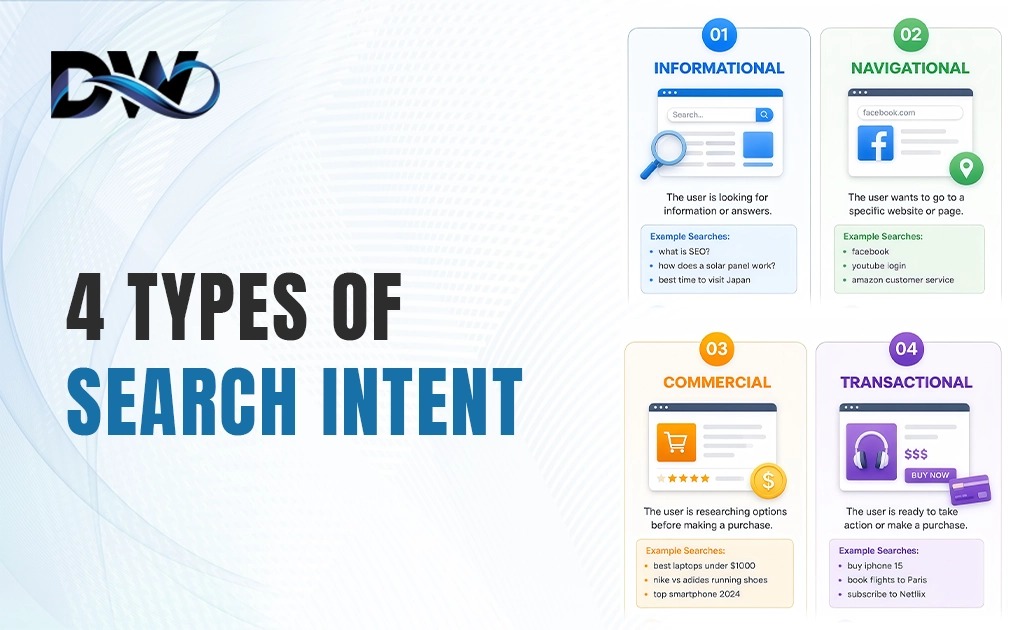
The art of search intent optimization is to align your content with what your searcher is looking for: information, comparison, purchase decision, or a specific answer. It is one of the most frequent mistakes that people make when creating highly rewritten content is that they misjudge what the intent is.
There are generally four types of intent to design around:
1. Informational: The searcher wants to learn something (“what is SEO content optimization”)
2. Commercial: They’re comparing options before deciding (“best SEO content tools”)
3. Transactional: They’re ready to act (“hire SEO content writer”)
4. Navigational: They’re looking for a specific site or brand
Before writing a single paragraph, check what’s currently ranking for your target keyword. If the top results are all long-form guides, a short product page won’t outrank them — not because it’s poorly written, but because it’s answering the wrong kind of question.
How to Structure SEO Content: 5 Formatting Habits That Work
Well-structured SEO content features short paragraphs, subheadings (H2/H3), bullet points, and a logical flow and structure with a clear H1. This hierarchy makes it easier for search engines to understand the topic structure of the page and enables AI systems to generate accurate, extractable answers.
Several structural practices have an out-of-proportion impact:
- One clear H1 that clearly states the topic and contains the main keyword.
- Descriptive H2s that align to subtopics that a reader would seek out.
- Two- to four-sentence paragraphs (not walls of text)
- Key points early in a section, then elaborate on them: front-loaded answers.
- Bullet and numbered lists on explanations of a process or list of items
The third and fourth point is more important than people realize. Both Google’s featured snippets and AI Overviews usually include the first sentence or two of a section, which is typically not the conclusion found three paragraphs down.
Formatting for Scannability
Most readers skim before they commit to reading. Bold key terms sparingly, break up long sections with subheadings every 200–300 words, and avoid dense blocks of text that make a page feel like a wall rather than a resource.
Keyword Usage Best Practices: 4 Placement Rules That Matter
SEO content best practices call for using your primary keyword in the title, first paragraph, one subheading, and naturally throughout the body without repeating it artificially. Semantic variations and related terms matter as much as the exact phrase.
Search engines have gotten much better at understanding topics through semantic SEO content rather than exact keyword matches. That means a page about “content optimization” doesn’t need to repeat that exact phrase twenty times; it needs to also naturally reference related concepts: readability, on-page SEO, search intent, content structure, and so on.
A practical placement approach:
- Primary keyword in the title tag, H1, and first 100 words
- Primary keyword in at least one H2
- Secondary keywords distributed naturally across subheadings and body text
- Related terms and synonyms used wherever they fit the sentence naturally
If a keyword placement makes a sentence sound awkward, that’s usually a sign it doesn’t belong there.
The Line Between Optimization and Keyword Stuffing
Keyword stuffing is repeating a term far beyond what natural language requires, often to the point where it hurts readability. Optimization uses a keyword where it belongs and relies on related terms and clear structure everywhere else. If you read a paragraph aloud and it sounds unnatural, it’s stuffed.
Internal Linking and Topic Clusters: A 3-Part Model
Internal linking best practices involve connecting related pages using descriptive anchor text, building topic clusters around a central pillar page, and ensuring every important page is reachable within a few clicks from the homepage.
Internal links do two jobs at once. They help search engines understand which pages on your site are related and how important each one is, and they help readers find more of what they’re looking for — which keeps them on the site longer.
A simple topic cluster model:
- One pillar page covering a broad topic in depth
- Several cluster pages covering specific subtopics
- Links flowing both ways between the pillar and its cluster pages
- Avoid generic anchor text like “click here.” Use descriptive phrases that tell both the reader and the search engine what the linked page is about.
Content Freshness and Updates: 4 Signs a Page Needs a Refresh
Content refresh SEO means updating existing pages with new information, updated statistics, improved structure, and expanded coverage rather than only publishing new content. Regularly refreshed pages tend to hold rankings better than content left untouched for years.
Search engines generally favor content that reflects current information, especially on topics where facts, tools, or best practices change over time. A content audit every 6–12 months checking for outdated stats, broken links, and gaps compared to newer competing content is one of the highest-ROI SEO activities available, because it improves pages that already have some authority instead of starting from zero.
Signs a page needs a refresh:
- Rankings have gradually declined over several months
- Competing pages now cover more ground
- Statistics or examples are outdated
- The page no longer fully matches current search intent for its keyword
AI Visibility and Answer Engine Optimization: 4 Tactics That Help
AI visibility for content depends on clear structure, direct answers near the top of each section, and factual accuracy that AI systems can confidently extract and cite. This is often called answer engine optimization, or AEO.
AI Overviews, chatbots, and voice assistants pull content differently than a traditional crawler. They favor passages that answer a question cleanly and self-contained, without requiring the reader to piece together context from earlier paragraphs. That’s why direct-answer paragraphs — a clear, standalone response placed right after a heading have become a core part of modern content structure, not just a nice-to-have.
A few tactics that support AI visibility specifically:
- Answer the question in the first or two of a section
- Use FAQ sections with direct, self-contained answers using SERP analysis.
- Structure data and comparisons in tables or lists where possible
- Ensure claims are accurate and specific, since AI systems weigh clarity and confidence in extraction.
E-E-A-T and Trust Signals: 4 Ways to Build Credibility
E-E-A-T stands for Experience, Expertise, Authoritativeness, and Trustworthiness the framework Google uses to assess content quality. Strong E-E-A-T signals include author credentials, cited sources, accurate information, and content that reflects real, first-hand knowledge of the topic.
Trust isn’t a single element you add to a page it’s built cumulatively through consistent signals: clear authorship, transparent sourcing, accurate and up-to-date information, and a site structure that shows genuine depth on a topic rather than one thin article surrounded by unrelated content.
Practical ways to strengthen this on any content piece:
- Attribute content to a named author with relevant credentials where possible
- Link out to credible, authoritative sources for factual claims
- Avoid vague, unverifiable statements
- Keep information current and correct errors promptly when found
SEO Content Optimization Checklist: 12 Points to Check Before Publishing
Use this as a practical pass before publishing or updating any page:
- Primary keyword appears in the title, H1, and first 100 words
- At least one H2 includes the primary keyword or a close variant
- Content matches the dominant search intent for the target keyword
- Headings are descriptive and logically structured
- Paragraphs are short and scannable
- Direct-answer sentences appear near the top of key sections
- Internal links point to relevant, related pages with descriptive anchor text
- External links reference credible, authoritative sources
- Content includes an FAQ section addressing common related questions
- Information is current and factually accurate
- Images include descriptive alt text
- Meta title and meta description are written for both relevance and click-through
Frequently Asked Questions
Find answers to common questions about Content Optimization
What is SEO content optimization?
What's the best way to optimize content for SEO?
Why is internal linking important in blogs?
How do I make content AI-friendly?
How often should content be updated?