Whether you’re running Google Ads for a local service business, an IT and SaaS company, or a real estate agency, the difference between a campaign that burns budget and one that compounds results is usually execution, not spend.
Struggling with leads or your business is not growing, then PPC Campaigns would be the best option for your business growth. Because it’s the PPC campaigns who help to make you know what doesn’t work for your business. The businesses that get ahead faster are the ones who understand what they’re actually optimising for before they start. Not every click turns into a customer and running ads without a clear strategy is one of the fastest ways to burn through a marketing budget with nothing to show for it.
What is an Effective PPC Strategy?
An effective PPC strategy is a structured approach to pay-per-click advertising that focuses on generating qualified leads rather than just increasing traffic. It combines the right keywords, audience targeting, compelling ad copy, smart bidding, optimised landing pages, and consistent performance tracking to get the best return on your ad spend.
The targeting side is what separates a PPC strategy from just buying traffic. You’re not broadcasting, you’re intercepting people who are already looking. High-intent audiences get directed to relevant landing pages, which improves conversion rates and reduces wasted spend.
Key Components of an Effective PPC Strategy
1. Keyword Research
Selecting the right keywords determines when and where your ads appear. Focusing on high-intent keywords that people actively search to buy or enquire to drive leads rather than just visits.
2. Audience Targeting
PPC platforms let you target based on location, demographics, interests, devices, and online behaviour. Used properly, this means your budget goes toward the people most likely to become customers rather than general browsers.
3. Compelling Ad Copy
Your ad has one job: get the right person to click. Strong headlines, relevant descriptions, and a clear call-to-action do that. Weak copy wastes impressions even when the targeting is correct.
4. Smart Bidding Strategy
Most new campaigns start on Manual CPC. You need data before automated bidding can actually help you. Switching too early is a common mistake that inflates CPL in the first 30 days. Once you have enough conversion history, strategies like Target CPA or Maximize Conversions can do the heavy lifting.
5. Optimised Landing Pages
The landing page is where most PPC budgets quietly die. A well-built ad sending traffic to a generic homepage can lose 60–70% of potential leads before they ever fill a form. The page needs to match the ad’s message, load fast, and make the next step obvious.
6. Performance Tracking and Optimisation
Monitoring CTR, conversion rate, Cost Per Lead, and Cost Per Acquisition tells you what’s working and what isn’t. Without this, you’re optimising blind. Regular reviews are what separate accounts that improve from accounts that plateau.
Why Your Business Needs a Strong PPC Strategy
The reason PPC works when other channels don’t is timing. You’re not interrupting someone , you’re showing up when they’re already looking. That intent gap is where the leads come from.
1. Reach Customers Actively Searching for Your Services
PPC ads appear when users search for relevant keywords on Google. That means your business reaches people with a clear intent to buy or enquire, not random traffic that bounces in 10 seconds.
2. Generate Immediate Website Traffic
An SEO campaign might take six months to rank. A PPC campaign can have your phone ringing by Friday. For businesses that need results on a shorter timeline, that speed is the whole point.
3. Capture High-Quality Leads
Targeting by keyword, location, device, and audience means the people clicking your ads are genuinely interested. That’s what produces leads that actually convert rather than enquiries that go nowhere.
4. Improve ROI Through Measurable Campaigns
Every click, impression, and conversion is trackable. That data tells you which parts of the campaign are working, which aren’t, and where to put more budget. PPC is one of the few marketing channels where you can see the direct line between spend and outcome.
5. Scale Marketing Efforts Efficiently
The infrastructure you build for a ₹50,000/month campaign is largely the same as for ₹5,00,000/month. The inputs scale so the setup doesn’t have to restart. As campaigns generate consistent results, you expand keywords, enter new markets, or increase budgets without rebuilding from scratch.
Why PPC Works for Lead Generation
PPC is one of the most direct routes to qualified leads because it targets people who are already searching. Searches like “best performance marketing agency near me,” “CRM software demo,” or “real estate consultant in Noida” don’t happen by accident these are people actively trying to solve a problem. Showing up at that moment is most of the work.
The targeting controls in Google Ads are specific enough that you can show ads only to people in a particular pin code, on mobile, between 6pm and 9pm. Most businesses don’t use half of what’s available to them. And unlike SEO, which takes months to build, PPC campaigns start driving traffic as soon as they go live.
1. Define Business Goals
Start by deciding what success looks like more leads, demo bookings, phone calls, or sales. Every campaign decision flows from this. Vague goals produce vague results.
2. Research High-Intent Keywords
Find the keywords people use when they’re ready to act, not just browsing. Commercial and transactional keywords cost more per click but convert at a higher rate that tradeoff is usually worth it.
3. Build Tightly Themed Ad Groups
Group related keywords into specific ad groups so your ads stay highly relevant. This improves Quality Score, reduces cost per click, and makes the message match between ad and landing page easier to maintain.
4. Write Compelling Ad Copy
Ads should speak directly to what the user is searching for. Clear value proposition, a specific benefit, and an action-oriented CTA. If the ad could apply to any business in your category, it needs to be rewritten.
5. Create Optimised Landing Pages
Match the landing page to the ad’s promise. If your ad says “Free PPC Audit,” the landing page headline should say the same thing. Mismatches between ad and page are one of the most common conversion killers.
6.Select the Right Bidding Strategy
Start with Manual CPC to gather data. Before launch, verify your conversion tracking is working — a campaign running for two weeks without conversion data is two weeks of budget you can’t learn from.
7. Launch Your Campaigns
Check every setting before going live: keywords, targeting, ad copy, budgets, and tracking. Launching with a mistake wastes spend and distorts the data you need for optimisation.
8. Track Conversions
Measure conversions, CPL, CPA, CTR, and ROAS. Tracking setup should be confirmed before the campaign launches, not added as an afterthought a week in.
9. Optimise Weekly
This is the step most accounts skip and it’s usually why CPL is higher than it should be. Review search term reports, pause non-converting keywords, test ad variations, and add negative keywords. One afternoon of this work per week compounds significantly over three months.
10. Scale Successful Campaigns
Once a campaign delivers consistent results, increase budgets, expand keyword targeting, or add new locations. Don’t scale what isn’t working yet scale what is.
Traffic-Focused PPC vs Lead-Focused PPC
Although both use PPC advertising, their goals and what they optimise for are completely different.
For businesses focused on growth, lead-focused PPC almost always delivers better return. Quality over volume is not just a philosophy here it’s what keeps CPL sustainable.
Choose the Right Bidding Strategy
Your bidding strategy is where budget efficiency actually gets decided not in the ad copy or the keywords. Google Ads offers both Manual CPC and Smart Bidding, each suited to different stages of a campaign.
Once you have 30–50 conversions in the account, that’s the signal to test Target CPA or Maximize Conversions. Before that threshold, Smart Bidding is guessing — it just does it automatically. Starting on Manual CPC lets you gather the data Smart Bidding needs to actually work.
Build Landing Pages That Convert to Lead Generation
A click that doesn’t convert is just a cost. Most accounts lose more leads on the landing page than they do in the ad auction and most landing page problems come down to the same two issues: message mismatch and forms that ask too much.
Maintain Message Match
If your ad promotes a “Free PPC Audit,” the landing page headline should say the same thing. This isn’t just good practice — it directly affects your Quality Score and conversion rate. Visitors who land on a page that doesn’t match what they clicked on leave immediately.
Optimise Your Lead Capture Form
Keep it short. Name, email, phone number — that’s usually enough to qualify a lead. Every additional field you add reduces completion rates. To improve form performance:
- Ask only for information you actually need at this stage
- Use action-oriented CTA buttons – “Get My Free Audit” converts better than “Submit”
- Add trust signals – certifications, reviews, or security badges near the form
- Include one or two customer testimonials close to the CTA
Optimise Your PPC Campaign Regularly
PPC campaigns drift. A keyword that converted well in January may be pulling in junk leads by March — search behaviour shifts, competitors change bids, landing pages go stale. Weekly reviews aren’t optional, they’re what separates accounts that compound results from accounts that plateau.
The minimum weekly check: review search term reports, pause what isn’t converting, test one new ad variation per ad group, and check if any new negative keywords need adding. One afternoon of this work each week makes a measurable difference over a quarter. Most accounts that come in for an audit have been running for months without anyone doing this & it shows in the CPL.
How Digital Works Solution Helps Build Brand Advantage
Digital Works Solution Best Digital Marketing Agency in Noida helps businesses to turn PPC from a cost center into a brand-building growth engine by combining strategy, targeting, landing page optimisation, and performance tracking into one integrated system. Instead of just chasing clicks, the focus is on attracting the right audience, improving lead quality, and creating consistent visibility across search, local, and performance channels.
For a business that wants stronger brand presence, this matters because every campaign touchpoint shapes how people perceive you. Better keyword targeting, stronger ad copy, and relevant landing pages not only improve conversions but also make your brand appear more credible, more focused, and more trustworthy at the moment customers are ready to act.
Conclusion
The accounts that generate consistent leads aren’t the ones with the biggest budgets they’re the ones where someone is actually looking at the data every week and making decisions from it. Keywords, bidding strategy, and landing pages all matter, but none of them work without the discipline of regular review and honest optimisation.
We audit PPC accounts every week that are spending double what they should be for the leads they’re getting. Usually the fix isn’t more budget it’s tighter targeting, a better landing page, and negative keywords that should have been added on day one.
If your PPC campaigns aren’t converting the way they should, let’s look at why. Get a free audit from Digital Works Solutions.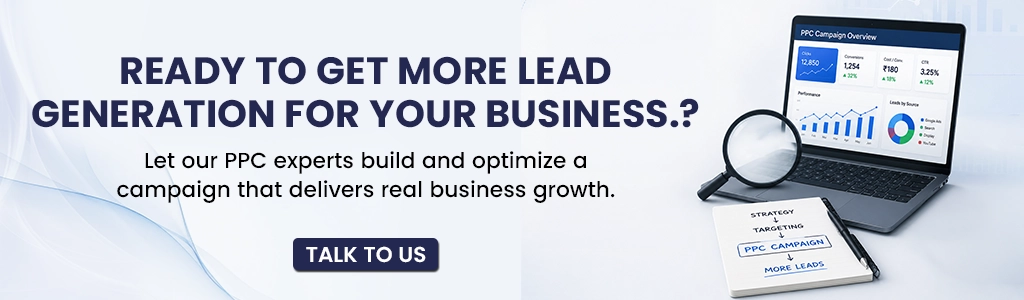
Frequently Asked Questions
Find answers to common questions about Effective PPC Strategy